Showing posts with label * Student Reflections #4. Show all posts

25 March 2009

Hannah's Reflections on Cape Town thus far

Cape Town Thus Far….
As I approach week eleven of my stay in Cape Town, I feel that it is essential to reflect upon my time here thus far and what I have learned and come to respect and cherish most. Before coming to Cape Town, I was really nervous and somewhat terrified of what life after UConn would entail. I had no idea what type of job I would be interested in, where I wanted to live or any of the other factors that one must decide upon after graduating from college. This unsure feeling terrified me. I felt quite frightened of the independence and responsibility and anxious about such freedom and lack of direction. I felt that I would be unprepared for the “real world”.

Luckily, this perspective has completely altered since my time in Cape Town. This outlook changed without my even realizing it. Through my time here, I have gained a strong sense of excitement for what lies ahead. To feel so passionately about a foreign place makes me curious and eager to travel more and delve into new experiences.

A major contributor to this change is my internship at Sonke. Nevertheless, I do not with to forget about or discredit my other interactions with the people I have met and spent time with in Cape Town. Through my internship and daily interactions with co-workers, friends and others, I have been able to obtain a better grasp on what my abilities, interests, strengths and passions are. I have gained a clear understanding of what is sincerely important to me.

I have a definite passion for gender studies and working towards equality with others (especially those of diverse backgrounds and perspectives). I have gained a deep respect, comprehension and devotion towards the Non-Governmental Organization (NGO) Sector. It is genuinely inspiring to be a part of an organization that is successful and influential; an organization that does positive and fundamental work. I have come to realize and understand the worth of organizations like Sonke.

Although I have whined and complained about all the papers I have had to write for classes this semester, I have come to appreciate Vernon’s internship assignments. Through these assignments, I have researched and acquired vital knowledge about how my organization runs, how it is structured, what the goals are and how they are implemented. Learning about the vision and goals, in particular, has reminded me of the significance and achievements of Sonke and has made me proud to be a part of the team. At this point, I feel like a true colleague (as my co-workers often refer to Steph and I).

I have learned so much from my positive, friendly, hard-working co-workers and the people around me in this amazing city that I could have never learned elsewhere. I hope that I can share what I have taken from this experience and use it to my advantage wherever else I may travel.

I have learned and heard this before in different ways and in different classes, however I truly understand and believe it now: gender work is not just work to help women or men. It cuts across all lines and deals with intersecting issues (of race, class, age, religion, etc). The point of gender work is to further equality and happiness of all people. This is a social movement that I know I want to be a part of and there are many possibilities and places to do this type of work. I am delighted with my work here and can only imagine what adventures lie ahead.

Hannah, Emily G. & Steph O

24 March 2009

Dan's Reflections on introducing his Dad to Cape Town


Throughout this trip there have been countless times when I have desired someone from home to be able to experience what I was experiencing. Pictures may be helpful aids, but they can never do something like Table Mountain, shark diving, the townships of Khayelitsha, or ‘smiley’s’ proper justice. I was lucky enough to have my Dad, Mitch come visit for a week. During this time I was able to take him beyond the majority of the touristy areas and get him somewhat acclimated with the true culture that makes up Cape Town. When I walked into the hotel to take him on the first outing into the townships, I realized how easy it was for people to come to South Africa and go through the strict vacation regimen. There’s nothing wrong with that idea except it seems odd that those travelers can enjoy the fruits of Cape Town while ignoring the townships that provide much of the workforce. In most cases these townships have an unemployment rate of at least 40% while having the most condensed populations in the country. It is for this reason I have grown to disagree with the ignorance of the typical tourist. However, I do understand that every country has its problems and when I go somewhere to relax I do appreciate the blissful delight of lying on a beach without a care in the world. Yet, in pursuit of being a knowledgeable tour guide I did my best to make sure my Dad was up on his feet encountering an array of things no first time tourist would encounter. Although this meant less time to sleep, he was ecstatic that he is now able to understand what I have been doing and who has become inspirational to me in my endeavors.

Although I may have seemed well-informed on the area of Cape Town, there was still loads of things I was able to learn while having my Dad around. He was the impetus to convince me to get a 1.50$ haircut at a shack outside of the Cape Town bus station. I was the only white person in sight besides my Dad who stood at the ready taking pictures. I originally wanted to do this merely for the experience. It was cheap and was the epitome of a South African haircut. However, after receiving one of the best haircuts I have ever received, I plan on going back in a few weeks to get another shape up before venturing back to the U.S. Right off the bat I became aware that it is impossible to judge something based on the price and appearance because you will usually be pleasantly surprised with what you receive.
However, this doesn’t always work this way. For example, when you buy street meat you know exactly what you’re getting whether or not you know exactly what it is. This brings me to a nice transition of one of the more daring things I dragged my Dad into. While in Khayelitsha, we were led around the township and brought to the home of a woman who serves ‘smiley’s’, otherwise known as sheep head. This is known to be one of the daily snacks that people living within the township enjoy. For about 25 Rand (35 Rand when my Dad and I paid), you’ll be given a lambs head that has been thrown onto a grill until the hair is singed off. Following this the head is boiled and then cut right down the middle. This makes it easier to grip because the teeth are prevalent enough to grab on to.

When we arrived to the place the woman who served us spoke no English. Apparently, we had missed out on a chance to dine on a fresh smiley so she pulled two halves of the head out of the fridge and tossed them in her microwave. As we waited I joked with my Dad and hid a bit of the anxiety I was experiencing. After several minutes, she pulled the sheep from the microwave and brought it to us on a plate. This began a race between our appetites and the surrounding flies. We were given some salt to garnish the sheep if so desired.


I had heard that the cheek and the eye’s were the best parts. Despite these tips I began with a bit of the crisply cooked face. I cut and tore a hunk of it off and began to chow down. Not too shabby. Our tour guide, who was one of my coworkers from the TAC, flipped the face over to show me where the cheek was located. We sliced a few hefty hunks of and I was nice enough to share this delicacy with my padre. Although he didn’t eat much he enjoyed what he had. The final task of eating the sheep was partaking in the eye. This was not only the most gruesome part but also the most fun. I used the knife to hastily cut around the socket and yanked out the eye with a nice ‘SQULECH.’ I quickly examined it before tossing the whole chewy ball in my mouth. It was so interesting I decided to dissect the other eye too. I attempted to share with my dad but to my glee he respectfully declined. After taking a nice chunk out of the eye I was able to stare at the pupil and whatever else was in there. It was fascinating stuff. This was a wild experience that I would highly recommend to anyone wanting to try something different from the realm of pizza or Chinese food.

Having my Dad here was much more than walking around and showing off the sites. I was finally able to relate to one of the closest people in my life and have a perspective of to how I have changed throughout my time here. It gave me a reason to take a step back and be happy with who I have become. Overall, I don’t think I’ve changed too much personality wise. However, as a person I feel I am more capable of handling stressful situations while remaining composed. From my range of opportunities I would also like to believe that I’ve become a more patient and better person. I was also extremely impressed but not surprised at the willingness of my Dad to try new things. A few of the more intense activities involved a bit of prodding but we were generally triumphant regardless. I am quite a lucky guy to have my padre come up and be put through the same things I have done. It was a great time.

Dan & Mitch Ratner

23 March 2009

Stephanie Y's Reflections on the consequences of decisions made

The decisions we make are not always as easy or inconsequential as they may initially seem. A simple ‘yes’ or ‘no’ can change the entire course of a day, week, year and our lives. Recently, I have been thinking about this, the choices we make, why we settle on one way or another, and how those decisions affect us. With some reflection, I have come to realize that the majority of the time I have been very happy with the choices I have made while other times I wish I had decided a bit differently…

There are a number of great activities I have participated in and decisions I have made that I have learned a tremendous amount from. For one, as Rachel previously blogged, one night after dinner at the house, a group of us piled into Ben’s car to go on a Magnum ice cream run and ended up seeing Morgan Freeman and Clint Eastwood filming right on Durban Road. We of course had a natural reaction: freaked out and stalked them for a little over an hour. The point here is not about our star-struck behavior but rather that if I had not made that seemingly small and insignificant decision to go in the car instead of call Mr. Delivery then I would not have had an awesome celebrity sighting. Clearly, that was an outcome that made me very happy as Morgan Freeman is one of my favorite actors and I now have endless material to tell highly-fabricated stories. Yet, my semester has not gone without a few wow, I really wish I had not done that moments.

Last week, during my lunch break at Place of Hope I happened to have one of those moments. I walked into the study where I eat and keep my bag. When I got to the doorway I saw one of the residents waiting on the couch. I assumed that she was about to have a meeting so, not wanting to interrupt, I quickly left the room. In that split second standing in the doorway I thought I saw she was crying so I popped back in to ask if everything was alright. She nodded yes in a way that clearly meant no, I’m not okay. At that moment, I didn’t know how to react; if I should go in and talk to her or leave. A number of thoughts raced through my mind and eventually I decided to leave. For some reason – maybe ignorance, fear or insecurity – I made an easy decision into a challenging one. I was immediately and continue to be disappointed with my choice. If I could change one thing about what I’ve done here, that would be it. I wish that I did not turn and leave but rather stayed to chat.

While this has not been the cheeriest of blog entries I do believe that it is an important one nonetheless. I am upset, but not defeated. Now I find myself with a new challenge, which is to try to understand why I reacted the way I did and of course, to choose differently should a similar circumstance ever arise.

22 March 2009

Rachel's Reflections on the Inauguration of the NEW Christel House School


Last weekend and this week have been extremely exciting and tiring. Christel House has been buzzing with anticipation for the opening of the new school and it was finally time to put all the hard work together and pull off an amazing day. But before I go into detail about the inauguration I should tell you all about the wonderful opportunities Christel House have given me. I have to thank Sharon Williams from Christel House for allowing Jill and myself the honor of attending the dinners and events that took place over last weekend and during the week. Jill and I were invited to have drinks and meet members of the board of directors of Christel House on Sunday night, and were also invited to attend a dinner for the board members and important guests and friends of Christel House on Monday night. Because of Sharon’s kindness we had the chance to meet Christel DeHaan herself, whom both Jill and I were very excited and nervous to meet. After only meeting her quickly it was obvious that we had no reason to be nervous because she was very friendly and welcoming to us. On Monday night Jill and I had another opportunity to meet Christel DeHaan and were able to have a fantastic dinner at Gold Of Africa Museum and Restaurant. We were able to meet many fascinating and influential people who have a hand in making Christel House the amazing school that is has become.

So, Tuesday rolls around and I get to school and it is alive with anticipation for the ceremony. Students are walking by wearing outfits for their performances, music is being rehearsed, teachers are bustling around trying to get their kids organized, and learners are excitedly chatting together. I had not had a chance to see the new hall until the opening, and it was wonderful to walk in with my students and see it completed and filled with people, ready for the upcoming events. The ceremony started with the national anthem and the Christel House credo, and was followed by a speech by the Mayor of Cape Town, Helen Zille. After the speech students gave wonderful performances. There were a variety of performances from a scene in the District Six play from last year, to traditional dancers. All of the performances were very impressive, but one performance stood out to many people. Two students sang a prayer to Christel DeHaan that touched the hearts of everyone in the crowd, bringing many to tears. The singing voices were incredible and their voices blended brilliantly together. The chorus also sang “A Whole New World,” and it was beautifully done. I was so impressed by all the students that I was, and still am, quite speechless. I knew that they were all very talented people but I had no idea the extent to which they were. I have never been so blown away by raw talent than I was on Tuesday.

After seeing the students perform it made me realize that without Christel House, many of these kids would not have had the opportunity to capitalize on their talents. It makes me extremely happy to know that I may play a small part in helping these kids realize their potential and to eventually achieve their goals and make their dreams come true. Christel House is helping so many kids, but there are many who are still getting improper education and I would like to be able to help all of them. But for now, since I am not super woman (yet), I will try my best to help the students in my Grade R class learn and grow into the wonderful young adults I know they will be.

21 March 2009

Cassidy's wonderings on what it will be like to return home

Before coming to South Africa everyone, including myself was wondering how we would adapt to a new culture. Now that we have been here for ten weeks I have completely emerged myself into the country and am starting to wonder how I will adapt to going back home. I have gotten so used to the ways of living here that I am not sure I will be able to go home and pick up where I left off. Everything here is so exciting every day. When I go home I know that there is no way that I will be able to have as much fun on a regular basis. Even the exciting things will seem mundane.

I am afraid that I will place unreal expectations on my friends. Even my friends have already come to this realization. They too are afraid that they will not be able to live up to my Cape Town life. They have made comments that have made me feel like a terrible friend even though nothing has happened yet. I want to make sure that none of these predictions come true, but I am not sure how to achieve this. Along with the exciting life here I have also made new friendships with the people that have been sharing these experiences with me. We will always have a bond that no one will understand because we did this program together. How will my friends understand this? They won’t be able to comprehend why and how I have changed without having been here. And now that this experience has become such a big part of my life I know that I will not be able to stop talking about it for a long time. But I know that everyone else who I left behind won’t want to listen to me go on and on about the amazing time I had. Sure they will initially want to hear about the fun things I did, but after that they will want to move on to the present. So how do I deal with not annoying them and still being able to reflect on the past four months of my life?

I know none of this will be easy and I don’t know if I will have the mental strength to deal with it. I am hoping that I am just being dramatic and that everything will fall nicely into place. But I know this is too much to ask for. Things in life are never that easy, as I have fully learned in South Africa. None the less, I am not dreading going home. I love my friends and family and know that our relationships are strong enough that we will work through any obstacles we face. I am so happy they have supported from the beginning and know they will continue to do so.

20 March 2009

Jordan's Reflections on the Independent Electoral Commission (IEC)

Last week I started my new internship at the IEC (The Independent Electoral Commission). Im working in the communications department, and regardless of the fact that nothing there relates to anything that I study, it has been absolutely fabulous.

The IEC was formed by the 1996 constitution, and a Chapter 9 Institution. Chapter 9 of the SA constitution created several organizations that would help support the new democracy, some of the other groups that were created at the South African Human Rights Commission, the Commission for Gender Equality, and the Public Protector, which investigates any complaints about the government. They are all independent of the government, but are still responsible to parliament since they get a good deal of government funds.

SO I'm working for the IEC, which runs the elections, and for anyone who doesn't know yet, on the 22nd there are going to be national and provincial elections here. The elections that are about to go on are also probably the most interesting/influential ones since 1994.

Something about me that makes my placement here even better is this: politics are my crack. I love them, and frankly, I was experiencing a shortage of political drama in my life after Obama got elected. SO for anyone that has a similar hole in their life, I would suggest doing some reading about SA... its like a soap opera. Except that its better, and crazier.

Part of my job being in the communications department is to keep up with what all of the SA papers are saying about the elections, and politics and the whole thing, So I do get to indulge myself all day hearing about Helen Zille's latest crazy comments about summoning the army or who the ANC got out of jail just in time for elections.

But in lieu of talking about politics for an entire blog, Ill talk about the press tour that I went on yesterday. Part of the job of the IEC is to set up voting stations all over the city so that people can vote. Some of the problems with this are that, there is not exactly buildings everywhere that people need to vote. Compounding that problem is that in the places where there are no buildings, there also tends to be the highest population density, the least space, and the most politically charged people.

So the press tour was to take some journalists around and show them what the situation is like that people have to vote in, ideally we wanted to show this so that coverage of these areas might be different on election day.

In these voting stations, it is not surprising if there are problems on election day, its what happens when you have a few thousand people standing in a line for hours in a crowded area on a hot day.

But when that type of thing happens, the media tends to jump on it and average people tend to just add it to the list of reasons that they stay away from townships, because in their mind, the people in Khayletisha are voting in the same conditions as them, and they just can't understand why they are so violent.

So we were trying to point that kind of thing out to the press, and show them that not everyone gets to have the same experience on election day.

The tour went to 4 voting sites in Khayletisha, and instead of talking about it, I suppose I will try to do exactly what the press tour did, which is show you.


The house in the background here is going to be used as a voting station. 

This is where another few thousand people are going to voting. Its basically just a space between buildings.

This is how you get to that space.


Needless to say, the trip was enlightening.

19 March 2009

Emily G's Reflections on seeking answers and finding questions


Like many other students, I came to South Africa with relatively lofty expectations of the people, landscape, adventures and culture that I would come to know during my semester abroad. I realized that in my time here I probably wouldn’t be able to change the world in a significant way, but I did believe that with my growing interest in global public health, this experience would help me better understand exactly what I wanted to do with my life. Until last fall, I knew with certainty that I was going to be a doctor, not because my parents pressured me or because I knew it is a career that would provide me with financial stability and independence. I really love medicine and its mysteries, and I love helping people. However, after paying my dues in organic chemistry and volunteering at the Connecticut Children’s Medical Center, I realized that it was possible that maybe I did not want to be a doctor and that I should probably spend time exploring other opportunities and interests.


I really hated not having a nice neat plan for after college, but I grew more interested in public health because it allowed me to examine medical issues with a more sociological and political lens. When I learned that I was coming to South Africa, I was ecstatic to have the opportunity to further understand health challenges such as HIV/AIDS in an area deeply affected by the epidemic. When I arrived in Cape Town, I learned that I would be interning at Olive Leaf Foundation, an organization that attempts to build human and social capital in areas greatly affected by the HIV/AIDS pandemic. Everything was perfect because I had this awesome internship in an area of my interest, and from this experience I would really know what career path to take once I complete college. I had a plan once again.

However, I was wrong. I enjoy my internship, but instead of reassuring me of my proposed career choice in public health, it has only opened many doors to more issues and challenges that people face on a daily basis and that I am intrigued by. Now I am learning a lot about human rights, gender inequality, development and even economics. Everyday my curiosity is peaked by a different issue at work or at the house or during class, and I am constantly considering very different paths to take after college, whether it will be working at an NGO, traveling around Africa or advocating for women’s rights.

Before I arrived in South Africa, I saw the study abroad experience as discovery of myself, and as a trip that would provide answers to so many questions about life that I have. However, I have only been asking more questions about the culture in which I live and work. I am finally realizing that becoming aware of issues and events around us and trying to learn as much as possible is really what I have come to Cape Town to do. I will go home with no idea what to do with my life after UConn, and have no idea what the solutions to poverty or inequality are. What I do know is that I will go home a more compassionate and informed human being, and am really excited (and scared) to tackle and work after college with some of the different issues I have observed while spending time in South Africa.


17 March 2009

Faina's Reflections on walking in the shoes of another

It is hard to capture and imagine the circumstances in which the majority of South Africans live in. The innumerable masses of people living and dying in poverty is an overwhelming and saddening reality which cannot fully be grasped until it is seen first hand.

You can walk into Thandokhulu High School, where I work, and watch the learners sitting at their desks trying to concentrate. All of them fully dressed in blue uniforms, even in the hottest of days. They take care to make sure everything is clean and tucked correctly. They take pride in looking neat. Those who can afford it wear black stockings while others have on long white socks which are pulled up from their black school shoes. All of their notebooks must be carefully wrapped in order to protect them through-out the term. Many of them have a small pouch that holds their pens, pencils, Tipp-Ex (white out), and other tools. In their back-packs or purses they also have a calculator, a ruler, their textbooks, maybe a glue stick and other necessities. Many of these are used to make their notebooks look nice and orderly (i.e. gluing the worksheets into their notebook or creating a colorful border with a ruler and colorful pen for the cover page of an essay). Many of the girls’ hair is pulled back or braided nicely, while the boys’ hair is often trimmed short. During break some of them pull out their cell phones or headphones and chat and laugh like any teenager would. Some sell snacks to other learners or run to the back of the school to buy fruit or chips.

When they are “writing a test” they work silently and intently, using their white out when they make a mistake. I also heard their beautiful voices when I walked past the choir practicing. The way the sound flowed, rising and falling was unreal and astonishing. During their assemblies you see them standing – heads fixed to the front – hearing the teachers tell them about working hard and doing the right thing. They transform into a frenzy of excitement and cheers as their new school representatives are announced and called to the front.


Their faces are full of smiles and content seeing their class mates succeed. They close their eyes and bow their heads in unison when it is time for prayer. Then you can begin to wonder what unimaginable obstacle they could be praying to get through. Is it to win their next soccer match? Is it to get that car that they have always wanted? Is it to get home without being mugged or harassed? Is it for their mother to get through another day?
Witnessing these learners from 8am to 3pm it is difficult to picture them in their other environment, in the reality from which they come. But I try to because it helps me realize who they are in totality. They all have different stories, live in different places but if I were to step into a learner’s shoes for a day it would begin at 5:30am. I would wake up to the noise of my alarm, if I had time to run to buy electricity after school the day before. Then I would fill up the basin of water in order to wash while making oatmeal for my sisters. I would rush to throw on my uniform, collect my books and leave to catch the taxi at 6:30am. I would see some other learners walking up to the taxi rank, and many others who are heading to work. The taxi rank would be busy now and I would have to wait aside while the man in charge organizes who goes in which taxi. Finally I get on and wait for all the others to be jammed in and we are on our way. I stare out of the window and see the house after house, shack after shack after shack pass me by. A woman carries a large container of water on her head, a man walks slowly, a huge line of older women and men stand outside waiting for something or other – maybe a government grant, maybe for disability or for old age. Then the shacks disappear in the distance and I am on the high way. I get dropped off at the bus rank and it is already 7:30 because the taxi took so long. If I get there past 8am I will be locked out of the school or punished so I walk fast to make it. School will be long and I will not buy lunch today so I can save the 5 Rands (50 cents) for dinner. When I leave school I will have to catch another taxi and will get back at about 5pm. Then I must wash my uniform, help cook, sweep the cement floor which will never look clean and try to finish my homework. The air is stiff and dusty. The tin corrugated roof does not quiet the rain drops when they fall and my cousins yelling cannot be avoided in this cramped room.


Many of the learners do not live with both parents. Their mother could have died of AIDS, their father stabbed in the streets. Their guardians are unemployed; the government grants allow them to live only at subsistence. They have to deal with death, abandonment, and lack of money. Every day they get older the temptation of leaving in order to make money tugs at them and the urge to support their relatives weighs down on them. Their families want them to continue school but only in principal because to them school means getting out of the township but practically if they are offered a job priorities will change. Truthfully even if they did get into a university the chances that they would be able to afford the whole ride or lift their entire family out of poverty is slim to none. The cheerful, bright eyed teens who meticulously scrub their uniforms each night look forward to unemployment, crime, disappointment, denial, disease and the early death of family and friends.
Every day I wish I could do more for them. If only everyone who had the money could give $1 one less person would cry for their brother who does not have shoes to go to school, for their grandmother who has to sell fruit or vegetables outside even though she is old and weak, for their sister who dropped out of school because the older man who was giving her and her family money got her pregnant and left her. But I take it one day at a time and do the best I can.

16 March 2009

Steph O's Reflections on gender violence

Emily G and Steph O taking a stand!

Last Wednesday was my first time participating in a workshop sponsored by Sonke Gender Justice Network. My colleagues, Leo, Max, and Mzamu facilitated the workshop that took place in the Township of Khayelitsha at the Black House Shebeen. The purpose of the workshop was to educate men on gender based violence through the One Man Can Campaign.

The workshop began at around 11am in the morning. The men gathered around drinking beers and conversing with one another before the workshop began. The first activity that was facilitated was laying out the ground rules. Everyone was able to voice their opinion regarding what ground rules they valued the most. Some men suggested respecting each other’s opinions, while others suggested that one should not hold back their opinions. Later, after the ground rules the pre-test began. The pre-test asked each participant questions which they had the option to agree with or disagree. Some of the questions that were asked included: Men are more clever than women; Under some circumstances it is acceptable for men to beat their partners; It is possible for a woman to be raped by her husband; Men have the right to decide when to have sex with their partner; and there is nothing I can personally do to prevent gender-based violence in my community.

As I looked down at my own pre-test form I chuckled to myself, thinking that these questions had obvious answers. Well of course under NO circumstances is it acceptable for men to beat their partners, I thought to myself. My curiosity drew my eyes to other people’s papers to peek at their responses. Suddenly, my heart sank. The men around me were marking “agree” next to many of the questions that, in my opinion, “were obvious disagree answers.” It was as if reality was slapping me in the face. These are real perceptions held by millions of men around the world, whether I agree with them of not.
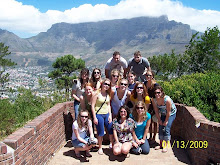
As a student of women’s studies and sociology I found it surprising that my initial reaction was shock. After semesters spent researching statistics and reading articles regarding gender based violence, why was I so shocked by these men’s perceptions after all? It was then that I realized that it was because it was the first time that I had to deal with the truth about living in a patriarchal society face to face. It was as if this experience had taken every lesson that I had learned from a piece of paper and transformed it into life. The next activity invited the participants to stand on different corners of the Shebeen according to their agreement with the stated statement. After choosing sides, the participants were encouraged to share their opinions and reasoning’s with the other participating members of the workshop. One of the questions asked was, “If you buy a woman a drink, are you entitled to have sexual intercourse with her afterwards?” The room split, and many of the men stood proud under the “Strongly Agree” sign that hung above their heads. “I’m not spending for free,” one of them shouted. There was laugher in the room, but I did not find it amusing. I felt so angry inside, but I knew that my feelings had to be explored. I could not judge this situation until after I had processed it.

The next question split the room 50-50, Leo asked if a woman is walking around at night wearing a short skirt, was she inviting rape? Some men responded yes, because they believed that “women were powerless, and men are not.” Other’s claimed that “women have beautiful legs and as men, they could not control their feelings.” Even some women in the group agreed, they claimed that women should know better than to walk around alone in the dark wearing a short skirt. Finally, a young man with dreads drinking a Black label beer stood strong against all odds and claimed that “just because a woman is weak doesn’t mean that you should take advantage.” I felt relief that this man had shared his opinion.

I was unable to stay for the entire workshop, but the long ride back to Loch Rd allowed me to reflect on what I had just experienced. I knew that I felt anger and despair in a room full of victims of a patriarchal society. But my biggest realization was that at least here in South Africa, Gender based violence is talked about. Conversely in the States, I have never in my entire life heard a man admit that gender-based violence is acceptable. Yet, it happens every day. Why is it that we claim to have come so far, when we as women cannot walk around the UCONN campus freely in the dark? We claim that women have rights in the states, but we don’t even have equal pay. So here I am, again reminded by South Africa, that the struggle for a more egalitarian society continues on a global scale. We must never forget that your struggle is our struggle, and from one another we can further educate ourselves.


Sonke Gender Justice Network ONE MAN CAN Campaign

15 March 2009

Kevin's Reflections on Cecil Rhodes, inequality & consensus decision making


I picked up a book from the library called Cecil Rhodes and his Time

Cecil Rhodes lived from 1852-1902 and was responsible for a large percentage of diamond and gold production in South Africa. He was highly involved in politics and became the premier of the Cape Colony in 1890. He even founded territory for his own country called Rhodesia (known as Zimbabwe as of April 1980). His ultimate goal is described in his will written before his twentieth birthday: “…the extension of British rule throughout the world … the colonization by British subjects of all lands where the means of livelihood are attainable by energy, labour and enterprise, and especially the occupation by British settlers of the entire Continent of Africa, the Holy Land, the Valley of Euphrates, the Islands of Cyprus and Candia, the whole of South America, the islands of the Pacific not heretofore possessed by Great Britain, the whole of the Malay Archipelago, the seaboard of China and Japan, the ultimate recovery of the United States of America as an integral part of the British Empire (8).”


The author writes in the next paragraph about how Cecil Rhodes believed that this type of worldwide empire was a prerequisite for world peace that would render wars impossible and promote the best interests of humanity. Popular belief at the time among the powers was that colonization activities were favorable to promote a more “civilized” way of life for all. That’s how large scale support was gathered in a nutshell.


How does this relate to my experience in South Africa? Basically all of the “economic growth” and many of the customs around me in South Africa is here because of primarily British/Dutch colonization.


Trains, Electricity, Automobiles, Television, Rugby, Cricket, Universities, Airplanes, Telephones, Pine Trees, Food Production Techniques, Christianity, Townships, etc are all a result of British/Dutch colonization. The South Africa I am experiencing is a combined experience of all of the groups that have been able to stake some type of claim in this area and the resulted interactions of all the various groups involved to this date. Inequality is rampant and socio-economic development has been at the forefront of government and NGO agendas since democracy/majority rule has begun in 1994.


A recent class discussion that relates to colonization and its inequalities is that of being born into a world where you have access to resources and services that maybe 75% of the rest of the world does not have access to. You might be starting the race “100 miles” ahead of others because you are a privileged minority. Some philosopher has written about this and I don’t remember who (If anyone knows and can comment that would be great). So what do you do? It wouldn’t be difficult to influence people to feel guilty about the things they have and take a more socialistic approach towards life by looking at the world through this lens because the situation is “unfair” – through a kind of Robin Hood lens.


What all of the students have learned on our trip in Cape Town that relates to the situation of making decisions that everyone may not agree with is the process of consensus decision making

Here in Cape Town the fourteen other students and I were engage the process of consensus decision making at least a few times a week (usually not by our own will unfortunately). House meetings, dinner planning, class group assignments are all conducted under terms that everyone must agree to. There is no voting – everyone must agree. I agree that the consensus decision making process helps solve problems, prevent problems, and fosters efficient, mature, and empathetic decision makers. I see the value of practice among small groups, but I discredit the process for working for millions of people. The process is time consuming and tends to actually reward the least accommodating group members. Relating back to the “100 miles ahead race” - if all of the decisions were made with consensus decision making process then the 100 mile gap would decrease (by undetermined means) since those behind would demand the gap decrease.


People like to look for something to blame when problems occur. During my time in Cape Town I’ve learned that many people actively spend their time looking for people and groups to blame for inequalities and ills in the world.


I’ve heard on more than one occasion that many of the problems that exist (gender inequality, racial discrimination, poverty) are because of the actions of governments, political parties, leaders, human greed, human nature, corporations, “those wealthy people on the top”, patriarchies, or capitalism.


Colonization and discrimination have caused countless problems for those who didn’t possess certain qualities. Is this enough to motivate people on a mass-scale to move away from self-interest activity to activity that promotes the welfare of complete strangers who share completely different cultural customs? I sound a bit cynic but if people aren’t going to profit from doing so then I don’t think much socio-economic development will occur for all groups or that any type of gap will lessen. The foundations for globalization are what people like Cecil Rhodes have labored their lives for and whose money past their death will continue to fund in the ways the individual saw fit. Views of globalization haven’t been agreed upon by all nations involved in the process – should they? Some have seen inequalities as being necessary to achieve equality in the future. Slightly intangible terms unless picked apart further and a bit of a paradox yeah? Pointing the finger, getting angry, and devaluing people, groups, and entire fields of study doesn’t help to reach a consensus either. The cycle of misinformation and refusal to understand the situation of the other side begins to repeat. These decisions are constantly being made and they do affect you – what role are you playing?


Kevin Bahr

14 March 2009

Julie's Reflections on Abalimi

Today, I sat down in front of my laptop, determined to recall every meaningful detail from my first day at my activism project. As all good 10 Loch Road-ians know, a proviso within Marita's syllabus requires that in addition to attending our classes and internships, we must also do a minimum of 12 hours of volunteering not connected or similar to the area of activism that our internships serve. For me, that meant finding a position volunteering that did not involve some form of tutoring or work in a school. Seeing as that requirement edged out many of the options I would have normally pursued, I had to be a bit more creative in my efforts to find an activist project. I understood that this stipulation was established with the aim of enabling all of us to get a more diverse understanding of the myriad of social initiatives South Africa has to offer. Even so, it proved challenging to find an organization that fit me as well as my placement at Thandokhulu. However, having spent the better part of two days learning and working at my newfound placement, I can honestly say I'm satisfied with my choice. The following blog entry is my attempt at a summation of the first day I spent at my activism project.

It took several weeks of slow e-mail correspondence with a few potential organizations before I finally found an NGO that needed my particular brand of help and piqued my interest. In a cursory Google search of "volunteering in Cape Town," I came across the website for Abalimi Bezekhaya, a very unique urban agriculture (UA) and environmental action (EA) association whose tentative roots were set down in the very midst of the era of apartheid in South Africa.

Abalimi (a word meaning “The Planters” in Xhosa) was founded in 1982 with the simple goal of helping starving people living in townships to subsist by teaching them to grow their own fruits and vegetables in the small patches of earth beside their homes. The restrictions of apartheid made operations involving large-scale gardening movements impossible, but as the apartheid regime began to fall apart, the organization's focus began to shift to grander objectives. With the first democratic elections in 1994, funding from the government became available, allowing for vast expansion from the Home Garden Movement to one that focused on helping those gardeners become farmers and entrepreneurs. In other words, the organization began to focus on transforming the level of gardening/harvesting being done from “subsistence” to “semi-commercialism.” Small personal gardens were expanded, the skills taught were more refined, larger cooperative farms were established to increase production, and thusly, sources of legitimate revenue were created within the townships.

After emailing the website for more information about potential volunteer openings, I was contacted by Abalimi’s resource mobilization manager, Rob Small. He requested that I attend a "Tuesday tour" before deciding on where I wanted to volunteer in the organization. In order to better understand how the organization serves the townships, he said, I would have to see the entire process from start to finish.

On I set off for Kenilworth Station to meet Rob, who agreed to pick me up to begin our 9-12 tour of Abalimi. After a short, incident free minibus ride, I arrived at my destination and hopped in the car with Rob. The tour officially started at the Fezeka Garden in Guguletu. Rob explained that this garden was one example of a home garden that expanded into a cooperative community garden with the help and support of the organization. The garden is 500 sq meters, and staffed by only six elderly women, one of whom spoke to me that day. Mama Gladys, who is 86 years old, was hard at work when we arrived, tending to the vast range of vegetables grown at Fezeka. The neatly tended sections were each labeled, with separate patches for eggplant, squash, lettuce, carrots, potatoes, peas, leeks, and mealies (corn), just to name a few. Much of the produce is eaten by the friends and families of the gardeners, but part of the excess is sold to members of the community in Guguletu. Rob proudly told us that Fezeka was also one of 15 community gardens that provided organic produce to the next stop on the tour: the Harvest of Hope headquarters in Philippi.

Mama Gladys and the rest of the very lively Fezeka ladies holding up their Female Gardener of the Year Award

Harvest of Hope was started in the beginning of 2008 when Abalimi’s staff began to notice a need for a dependable market of customers for the entrepreneur farmers to sell their produce. Rob explained that while there are people with food and no money, and also people with money and no food, it is often difficult for those people to find one another to do business. Making the jump from simple gardening to commercial farming is difficult for those who attempt it because much of the produce they grow cannot be sold quickly enough. The waste and costliness of growing more than can be potentially sold is a main deterrent in discouraging amateur gardeners from moving to farming as a main source of income. This, Rob explained, was where Harvest of Hope comes in. Every Tuesday, this organization collects the excess of harvested vegetables from the 15 contracted gardens, washing, packaging, and distributing it to hungry local customers. Some of the customers are simply individuals and families who order the organic produce weekly, but most of the produce is earmarked for local schools as food for the learners. This weekly process assures that township farmers always have an income, encouraging the creation of environmentally sound farming and the creation of jobs and creating a viable produce market for the future.

Working hard in the Fezeka Garden in Guguletu

The next stop on our journey was the Garden Center in Nyanga East. This center was established when the first center (in Athlone, 1982), was moved in 1985. The Garden Center, as Rob explained, is "where it all began" with the start of the Home Gardening Movement. Since its establishment, the Garden Center has helped to supply and consult gardening beginners in the surrounding townships. The center first simply supplied seed, compost, tools, and other necessities for gardening and farming, as well as offering classes helping gardening novices to start their own small gardens in their neighborhoods. As the organization expanded, however, classes offered have become more specialized to help gardeners expand their gardens into sources of income for their families and communities. This connects directly back to gardens like the Fezeka Garden, who have benefited directly from Abalimi's services.

I had my first real day working alongside Mama Gladys at the Fezeka garden today, but I will save that story for another blog entry. I will say that I am extremely pleased to have the opportunity to learn from the people involved in this very special organization.

13 March 2009

Emily A's Reflections on SA politics

For those who don’t know, Jacob Zuma is the head of the African National Congress (ANC) and the leading candidate for the upcoming election. He also was removed from office after having been linked to corruption charges, is currently on trial for rape (note that this is not his first time), and is characterized to be an AIDS denialist who when questioned about HIV prevention said that he usually takes a shower in order to “cut the risk of contracting HIV.” When I first heard about this, I was shocked and couldn’t believe that such a man will be elected in April with the support of more than half of the nation. The explanation I received through a combination of classes and simply talking to people was a lot more complicated than anticipated.

As most people know, in 1994 Nelson Mandela was elected the first president of South Africa. Upon taking office, it was understood that Mandela would hold office for a single term and the presidency would then be handed over to Thabo Mbeki, another leading member of the ANC.

Later, in 2001, well into Mbeki’s first term, prominent ANC members Tony Yengeni, Schabir Skaik, and Jacob Zuma were charged with corruption and fraud over the Arm’s Deal. The first two men were prosecuted and found to be guilty of the alleged charges. Although there was not enough proof to convict Zuma, the deputy president of the ANC at the time, there was substantial evidence linking him to Shaik, his financial advisor. As a result of the scandal, Mbeki announced that considering all the allegations, Zuma would be removed of his duties as government officials should not be legally questioned while in office.

Over the next few years and the remainder of Mbeki’s term, despite overseeing an economic growth of five percent per year (the biggest boom since 1981), he was criticized for not distributing prosperity to poor blacks and for being very dismissive about crime, unemployment, public health, and HIV/AIDS issues. On top of that, many of his policies were classified as ‘neo liberal’ economics and his centralizing tendencies tended to isolate factions of the population. Further, towards the end of his second term he attempted to run for a third time contesting the precedent of a two term maximum making people question whether he had too much power.
As such, in 2007 at the ANC’s Polokuane Conference, Mbeki was replaced as the president of the ANC by Jacob Zuma making Mbeki a lame duck president as he was required to follow the ANC that Zuma was now in charge of. This issue caused a split in power between Mbeki and Zuma supporters and ultimately the Mbeki faction separated from the ANC to form a new political party: COPE. Through a few other issues, Mbeki was removed from office and replaced by interim president Motlanthe until a new president is selected in the upcoming April elections.

12 March 2009

Michelle's Reflections on death . . . and life

Yesterday I found out that my ex-boyfriend died on Saturday night. This came as such a shock, and it is something that I cannot even begin to process. We dated in high school, and although we have stayed in touch, we were not the closest friends, but I still cannot help the shaking feeling; it seems there is something so different about losing a person your own age, as opposed to losing an older family member. In both instances, there is no way to prepare oneself. The grieving process is different for everyone, but there is something so real about dealing with the death of a friend, or an ex. I want to write about this, but I do not want to do so in a structured context. So, this blog will be without structure, and focused on free-flowing thoughts and feelings.

I found out right before I left for work on Monday, and all I could think was “why.” Why someone so young? Why couldn’t he ever get to a place where he could find some sort of peace? Why and how could his demons have won? I always hoped he would win the fight and find some sort of happiness. No matter how much trouble he ever got in, and no matter how many poor decisions he made, it never changed the fact that he was a good person. He was a good person who never intentionally hurt anyone, and in the end, he hurt himself.

I then began to think about how here, in South Africa, especially in Khayelitsha where I work, this sort of loss is a constant reality. I still cannot wrap my mind around that. How can anyone ever “get used to” losing a friend, an ex, a son or daughter, or cousin or neighbor? How has this become reality, a common occurrence, for so many people in this world? How is it possible that in places like the townships, or in places like the inner city in any state of the US, we allow these tragedies to continue? I am, in many ways, brought to my knees from losing someone who has not even been a consistent part of my life; I can only imagine what it must be like to have the consistent part of your life be the loss of loved ones.

I recently finished reading a book called Beauty’s Gift, which is about five best friends in South Africa, and how they deal with the death of one of the friends. Beauty unexpectedly died from AIDS after she contracted it from her unfaithful husband. The news of the loss, specifically of the fact that the loss was from AIDS, tore the best friends apart. The book took place at a time when AIDS was really beginning to affect the people of the townships, and they were also dealing with many other losses at the same time that they lost Beauty. After I found out that Mike died, I instantly thought of this book.

I also instantly thought of everyone who was left behind, and how they were left with the pain of losing a loved one. What about his parents? What about his sister? What about his nieces and nephews? What about his best friends? I thought of a speaker I saw in Cape Town, at the Book Lounge, and how she spoke about the pain of those left behind that is often overlooked. I will process this and grieve in my own way, but how will his close family, and his few close friends, who were the equivalent of family, begin to cope and move on? He didn’t die of cancer, or in a car accident, but from his own actions. How can one not dwell on what could have been done differently? How can one not fixate on how this so easily, in one minute even, could have been prevented?

On the one hand, dealing with this in South Africa is more difficult because I do not have the support of my friends, especially those who also grew up with him. But, on the other hand, being here in South Africa and hearing this news allows me to have a different perspective. I cannot say that it makes it easier, but I can say that this experience here has made me hyper-aware of my feelings about life and about death.

This weekend, I went bungee jumping off the highest jump in the world. I was not nervous, but excited, even though I always swore that it was something I would never do. I was the first one to jump, and there was a split second before I jumped off the bridge where I thought, “what if I die?” But, I pushed myself, both literally and figuratively, and jumped a second later. For me, that jump represented me overcoming so many of my fears and how important it is for me to live in the moment and to actually Live my life. I cannot live in fear, like I have for so long, but I have to push through and try to be aware of all of my surroundings. I have to try to do as much good as possible, and make as much of a difference, in whatever small ways, in my short time here. Life is so fragile, and I was reminded of that yesterday morning.

I want to try to stay as positive as possible, and not get sucked into the questions of why, or the thoughts of how unfair this is. I am lucky, and being in South Africa is a constant reminder of that. There are so many things in life that are out of our control. Life is what you make of it, and I am trying to keep things in perspective and make the most of every day. My time in South Africa is going by so fast, but it is also making me better able to deal with and understand life and death and how I want to spend my time on this Earth. There is no better gift than that.


"You must be the change you wish to see in the world."
-Mahatma Gandhi

11 March 2009

Chelsea's Reflections on Black Sash

I suppose it is in the nature of an African NGO to be understaffed, overworked, and underfunded. But the turbulent political season and the pressures of a faltering global economy have only exacerbated the frenzied atmosphere at the Black Sash National Advocacy Office. The three staff members in the National Advocacy Department work in a large, shared room in the corner of the organization’s fourth floor office. At one time the room served as a conference area, but now it is partitioned by cluttered desks and mismatched chairs. Colourful African prints hang between the windows and behind the desks, while overfilled bookcases and bulletin boards line the rest of the pale yellow walls. On the inside wall sits a large white-board that is perpetually filled with columns and diagrams and red-marker scrawl, layered so thick it’s hard to imagine the board was ever truly white. The visual chaos on that board seems to be a constant reflection of the activity in the office. Some days the staff gathers around the make-shift conference table for hours, throwing ideas back and forth and scribbling on the board with hours and underlines. Lately, the staff has been caught up in preparing for the national programme meeting, but in the last two months, the focus was largely on the major political events taking place in the country.
Black Sash Office

Following any act or declaration by a political entity (usually Parliament), the Black Sash scrutinizes the message to determine its relevance and the stance of the organization towards new policies or changes. It is common for the Black Sash to release a public statement either commending or admonishing the government action, speaking on behalf of the disenfranchised people whom the organization aims to support. Many of the weekly or biweekly meetings held in front of that white board revolve around press statements and national programme improvements, as provincial staff travel to Cape Town to discuss the impact of certain policies and services at the local level.

2009 is already shaping up to be a big travel year within the organization. It is hard to remember a day when our three advocacy staff members were all present for a full day at the office. They frequently inform us that they’ll be flying out to a conference in this city or that province the following morning and won’t be back until the next week. Other times, they must rush off for an interview or appearance at a national forum outside of Cape Town. The national advocacy staff are always poised and prepared for the perfect press blurb when they appear in public or on television, so it is often a surprise to see them shuffling through piles of papers and scrambling to put reports together behind the scenes. The final product – a well-received statement, a programme drawing due accolades – often seems like one produced by a well-oiled, corporate machine, or at least a well-staffed, well-paid media establishment. The considerable difference, however, is that the Black Sash is constantly in tune with the needs of the people it represents, and the team behind the organization’s PR are the very faces and names you see quoted in the daily paper. The organization is authentic; its efforts to “make human rights real” are genuine.

Nothing could exemplify these facts better than the bits of office life that we, as interns, witness from the corner of the national office three days a week. Over the tops of our laptop screens we watch our co-workers engage one another in current events discussions. We hear them giving telephone interviews in English, Afrikaans, and Xhosa. A few weeks ago we provided feedback on three radio public service announcements that the organization put together to encourage applicants for the Child Support Grant. Our involvement – however peripheral in the grand scheme of the organization’s work – serves to provide the background research for nationally circulated reports and statements. Sometimes we simply run relevant newspaper articles through the fax machine or collect and summarize the organization’s previous statements on particular issues. 

But most of the time we are knee-deep in policy research, preparing reports that will help to provide the framework for advocacy work on the national level. Recently, we even came on board a project to compile a comprehensive history of social security plans in South Africa.

Though we often leave the office at the end of the day without any concrete product to symbolize the work we’ve done, the frequent thanks and appreciation of the office staff are more than enough to show us that our contributions to the organization and its admirable human rights objectives are valuable.